Belgian private foundation · Brussels · Registered office ↗

Capital for
your large projects.

Finance to support industrialisation.

Since 2014, BRIDGIN has focused on financing physical infrastructure and related equipment for countries that formally request its involvement. Eligible projects address priorities set out in their National Development Plans (NDPs) and National Development Strategies (NDSs).

The Foundation prioritises public-sector projects. Private-sector projects may be considered exceptionally where they deliver significant and demonstrable improvements in people’s well-being and align with its mission.

CAPEX scope Capital-intensive infrastructure with minimum capital expenditure in the tens of millions of EUR or USD, excluding land costs.

More than a decade of commitment in service of industrialisation and Tikkun Olam ↗.

Our approach ↓
A global perspective

An international perspective

Americas

Europe

Africa

Asia

National priorities. International expertise. Confidential cooperation.

Red: Rwanda and DRC—targeted sanctions concern certain individuals and entities; this is not a general economic embargo against these countries. Each transaction requires counterparty screening and review of applicable restrictions. Reviewed on 16 November 2026; not a compliance clearance.

01 / Mission

Industrialisation: a lasting path to Tikkun Olam.

Resources, Education and Culture are the three pillars of our mission. Together, they support economic and social progress through value creation, employment, greater self-reliance and respect for human dignity. The aim is lasting improvement in human well-being, aligned with the United Nations Sustainable Development Goals (SDGs), with particular emphasis on women’s empowerment.
UN SDG Agenda 2030 ↗

Our vision of Tikkun Olam ↗: “repairing the world” through industrialisation that creates shared value for host countries and commercial partners. A win-win model fostering shared prosperity and wealth creation.

Three pillars of action.

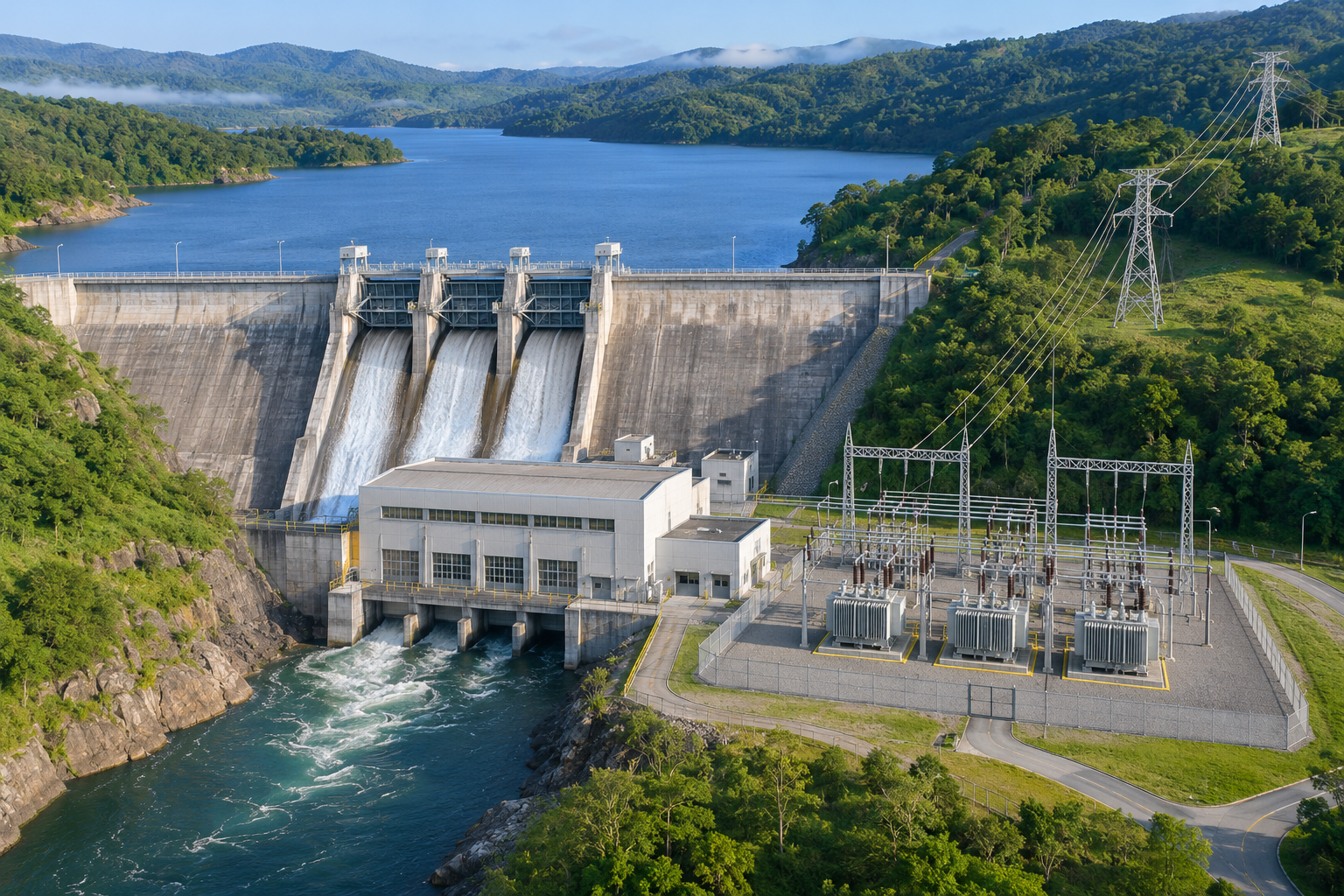
Hydroelectric dam and substation — illustration
Pillar 01

Financial resources

Finance revenue-generating infrastructure and related equipment, commercially viable throughout the concession period. With full transparency towards the host country’s Ministry of Finance, BRIDGIN collects revenues through appointed operation and maintenance (O&M) providers, with project monitoring and control by Big Four firms under agreed mandates.

Knowledge transfer in an electrical laboratory — illustration
Pillar 02

Education & knowledge transfer

In close collaboration with public and private universities, BRIDGIN prepares local students and recent graduates to take over and operate the assets during the concession period and beyond. EPC contractors, equipment suppliers and O&M providers transfer the necessary expertise. These universities also provide a forum for conferences on high-tech and low-tech solutions, alongside democratic debate.

International fashion runway — illustration
Pillar 03

Art, Fashion & Design

Art, Fashion and Design help break down cultural barriers. This opens the way for cooperation between peoples from different cultural backgrounds. This is where BRIDGIN promotes local talent internationally through exhibitions, fashion shows, concerts and sporting events.

02 / Approach

BRIDGIN’s Financing Mechanism

BRIDGIN’s delivery and financing model is FBOOT: Finance–Build–Own–Operate–Transfer. It covers funding, construction and equipment supply, ownership and operation under concession arrangements, followed by transfer on the agreed contractual terms.

Revenues and operating cash flows are intended to cover costs, service financing and enable capital recovery (CAPEX) over the concession period. Subject to financial performance and contractual commitments, available resources also support the Foundation’s public-interest mission.

Where appropriate, financing instruments linked to the EU’s Global Gateway initiative may provide a complementary funding route, subject to eligibility and approval by the relevant institutions.

Agencies participating in the OECD Export Credit Group’s work; this directory is not a list of BRIDGIN partners.

From assessment to commitment

  1. Prepare

    Following a formal request signed by the authorised representative, BRIDGIN assesses project feasibility, delivery conditions and the necessary land rights, licences and permits.
  2. Structure

    Structure the financing around project risks and forecast revenues. Establish the requirements for local operations and access to banking services under the applicable framework.
  3. Commit

    Coordinate the parties and agree mobilisation arrangements, including work authorisations, visas and personnel security, in line with their respective responsibilities.

Financing and cover remain subject to eligibility, due diligence and approval by the relevant bodies, including those in OECD countries, in accordance with the applicable frameworks presented in the institutional and regulatory references [1–7].

03 / Legal Basis

Integrity & compliance
AML / CFT / UBO

BRIDGIN’s governance and compliance framework defines how stakeholders work together: public authorities, commercial banks, export credit agencies (ECAs), EPC contractors, equipment suppliers and O&M operators, including those based in OECD countries, alongside audit and advisory firms, local subcontractors, research centres and universities.

Subject to agreed mandates, the Big Four—Deloitte, PwC, EY and KPMG—alongside Grant Thornton, SGS, BCG or Accenture may provide audit, inspection, advisory or monitoring services within their respective areas of expertise across the FBOOT lifecycle. Their inclusion does not imply an existing partnership. Counterparty due diligence and transparency of ultimate beneficial ownership (UBO) remain core requirements.

The Foundation is committed to complying with applicable laws and regulations in each jurisdiction, including the relevant requirements outlined in references [1–7].


Institutional and regulatory references [1–7]+ Open the references− Close the references

These references are presented according to their scope. They do not constitute authorisation or certification of the Foundation by the organisations cited.

  1. Banking prudential framework
    BIS / Basel Committee — Basel III ↗Reference for banks involved in financing; this does not describe a banking authorisation held by BRIDGIN.
  2. European Union — anti-money laundering
    Directive (EU) 2015/849, as amended ↗AMLD IV, notably amended by Directive (EU) 2018/843 (AMLD V), and national implementing legislation.
  3. European Union — new AML/CFT framework
    Regulation (EU) 2024/1624 ↗ · Directive (EU) 2024/1640 ↗General application of the Regulation from 10 July 2027; phased transposition of the Directive. European Commission legislation overview ↗
  4. Sanctions and terrorist financing
    EU Council — counter-terrorism sanctions ↗ · United States — OFAC programmes ↗Applicable regimes and lists, according to the persons, territories and transactions involved.

    Counterparty screening: OFAC Sanctions List Search ↗

  5. United States — AML/CFT framework
    Bank Secrecy Act ↗ · USA PATRIOT Act ↗ · Anti-Money Laundering Act of 2020 ↗Relevant provisions and implementing measures according to the transaction’s US nexus.
  6. Belgium — prevention and transparency
    Law of 18 September 2017, as amended (FR) ↗ · UBO Register — FPS Finance (FR) ↗Beneficial ownership obligations for foundations, including under the Royal Decree of 30 July 2018, as amended.
  7. Belgium — financial supervisory authorities
    NBB ↗ · FSMA ↗Institutional references; no authorisation or supervision of BRIDGIN is implied.
04 / Contact

Discretion and institutional engagement

BRIDGIN accepts initial approaches exclusively through institutional and diplomatic channels. Requests must be signed by an authorised senior government representative or, for a private-sector project, the company’s chief executive, with a copy to the relevant country’s Ambassador in Brussels. Information about projects in other countries is not disclosed for marketing purposes or as commercial references. Authorised due diligence takes place within a confidential framework, limited to relevant information and authorised parties, subject to legal obligations.